How to Find the Best Dentist in Geneva: Complete Guide 2026
Choosing a dentist in Geneva should not feel like a lottery. Switzerland has one of the strictest dental regulatory systems in the world, yet prices swing wildly between clinics: a single crown can cost CHF 1,100 at one practice and CHF 2,400 at another, for identical materials. This is the no-nonsense guide we wish we had when we moved to Geneva. It covers Swiss qualifications, the SSO quality mark, how to find an English-speaking dentist if you are part of Geneva’s large expat community, how much you should actually be paying in CHF, the warning signs that should make you walk out, and a neighbourhood-by-neighbourhood map of where Geneva’s dental clinics cluster. Every claim is sourced from the Swiss Dental Association (SSO), the Federal Office of Public Health (FOPH) and peer-reviewed dental literature.
1. Why choosing the right dentist in Geneva actually matters
Dental care is the largest out-of-pocket healthcare expense for most households in Switzerland. Unlike France, Germany or the UK, routine dentistry is not covered by basic Swiss health insurance (LAMal). According to the Federal Statistical Office (BFS), Swiss households spent over CHF 4.2 billion on dental care in 2023, and the average resident of canton Geneva pays around CHF 700–900 per year out of pocket for dental treatment.
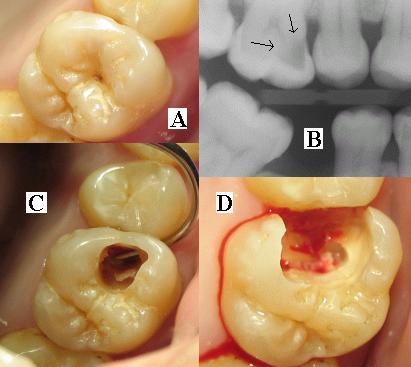
Because you are paying directly, the gap between a good clinic and a bad one hits you in two ways: your mouth and your wallet. A poorly placed implant can require CHF 4,000–6,000 in corrective surgery. A missed caries lesion on an X-ray can turn a CHF 250 filling into a CHF 1,800 root canal within 18 months. The stakes are real and choosing well the first time is the single highest-ROI decision you can make as a Geneva resident.
The good news: Switzerland’s regulatory system is genuinely strict. Every practising dentist must hold a Federal Diploma in Dentistry, be listed in the federal MedReg register, and meet cantonal authorisation requirements. If you know what to look for, you can filter out 95% of potential problems before you even sit in the chair.
2. Swiss dental qualifications explained
Switzerland recognises exactly one entry-level qualification to practise dentistry: the Federal Diploma in Dentistry (Eidgenoessisches Staatsdiplom als Zahnarzt / Diplome federal de medecin-dentiste). It is awarded after a five-year university programme followed by the federal examination under the Medical Professions Act (Medizinalberufegesetz, MedBG).
Only four Swiss universities are accredited to teach dentistry: University of Geneva, University of Basel, University of Bern, and University of Zurich. The programmes are identical in structure: 3 years Bachelor + 2 years Master + federal exam. Total training time: at least 5 years full-time, followed by the federal exam. Many dentists then spend 2–3 additional years as assistants before opening their own practice.
EU dentists can have their diploma recognised by the Medizinalberufekommission (MEBEKO) under the Switzerland–EU bilateral agreement on free movement. Non-EU diplomas require a formal equivalency procedure and often an additional exam. This is important because it means every dentist you meet in Geneva with a registered practice has either trained in Switzerland or has had their foreign diploma checked by the federal authority.
Quick verification: MedReg
You can verify any Swiss dentist in the federal register medregom.admin.ch. Search by name, filter by canton (Geneve), profession (dentiste). Shows diploma, year of graduation, specialty titles and authorisation to practise. If a dentist is not in MedReg, they are not legally authorised to treat you in Switzerland.
The SSO quality mark
On top of the federal diploma, around 90% of Swiss dentists voluntarily join the Swiss Dental Association (SSO), known in German as Schweizerische Zahnaerzte-Gesellschaft. Joining is not mandatory, but it is a strong quality signal. SSO members commit to:
- •Follow the SSO code of professional ethics
- •Use the official SSO tariff when billing (transparent, point-based)
- •Carry mandatory professional liability insurance
- •Complete at least 80 hours of continuing education every 2 years
- •Submit to peer-review and an arbitration process if a patient complains
At cantonal level, Geneva dentists are organised in the Societe des Medecins-Dentistes de Geneve (SSO Geneve). Look for the SSO membership logo on clinic websites, or ask directly. If a Geneva dentist is not SSO member, that is not automatically a red flag, but you should ask why and what equivalent quality framework they follow.
3. The 10 criteria that actually matter
After interviewing dozens of Geneva residents and cross-referencing SSO guidelines with international best practice (NHS, ADA, BDA), these are the ten criteria that correlate with patient satisfaction and long-term outcomes. Score every clinic you consider out of 10. Anything below 7 is a walk-away.
| Criterion | What to look for | Weight |
|---|---|---|
| Federal diploma + MedReg | Listed in medregom.admin.ch. No exceptions. | 10/10 |
| SSO membership | SSO logo, uses SSO tariff. Geneva chapter preferred. | 9/10 |
| Specialty titles | "Specialiste SSO en..." for complex work (implants, ortho, endo). | 8/10 |
| Transparent written quote (devis) | Itemised in SSO points, fixed before treatment starts. | 9/10 |
| Modern technology | Digital X-ray, intra-oral scanner, CBCT for implants. | 7/10 |
| Languages spoken | Fluent English for expats, plus French. | 8/10 |
| Google + independent reviews | 4.5+ stars, 50+ reviews, responses to negative ones. | 7/10 |
| Accessibility | Evening/weekend hours, emergency slots, TPG transport. | 7/10 |
| Hygiene & sterilisation | Class B autoclave, single-use items, no cross-contamination. | 10/10 |
| Continuity of care | See the same dentist on return visits. Documented notes. | 8/10 |
Hygiene and sterilisation carry the highest weight because this is where shortcuts can cause infections, hepatitis or HIV transmission, however rare. A professional Geneva clinic will proudly show you its sterilisation room if you ask. If they refuse or get defensive, walk out.
4. Red flags: when to walk out immediately
These are the warning signs that should make you politely finish the appointment, pay nothing beyond the consultation fee, and look elsewhere. Every single one has come up repeatedly in patient complaints filed with SSO arbitration panels and the cantonal medical commission.
No written treatment plan (devis)
Swiss law and SSO ethics require a written, itemised quote before any treatment above roughly CHF 500. If a dentist wants to “just start” on a root canal or implant without giving you a signed document, that is a hard stop. You have the right to see the plan, take it home and get a second opinion.
Pressure to decide immediately
“This offer is only valid today.” “You need to start treatment this week or it will get worse.” Dental emergencies exist (acute pain, infection, trauma) but 95% of treatment plans can wait 2–3 weeks for a second opinion. High-pressure sales tactics are associated with low-quality clinics worldwide.
Unusually low prices vs. SSO tariff
Everyone loves a bargain, but if a quote is 40% below the SSO tariff, ask where the saving is coming from. Often the answer is cheaper implant brands from unregulated manufacturers, inferior ceramics, or outsourced lab work from countries without CE-marked quality control.
No digital X-rays or refusal to share them
Digital radiography has been the standard in Switzerland since the early 2000s. It emits roughly 90% less radiation than analogue film. A clinic still using film-based X-rays in 2026 is behind the curve. More importantly, your X-rays belong to you under Swiss data protection law. Any dentist who refuses to give you a copy is hiding something.
Suggesting extractions when alternatives exist
Modern endodontics (root canal treatment) saves 85–95% of teeth that used to be extracted. If your dentist jumps to extraction for a painful molar without considering RCT, get a second opinion from an SSO specialist in endodontology.
No sterile PPE or visible hygiene breaches
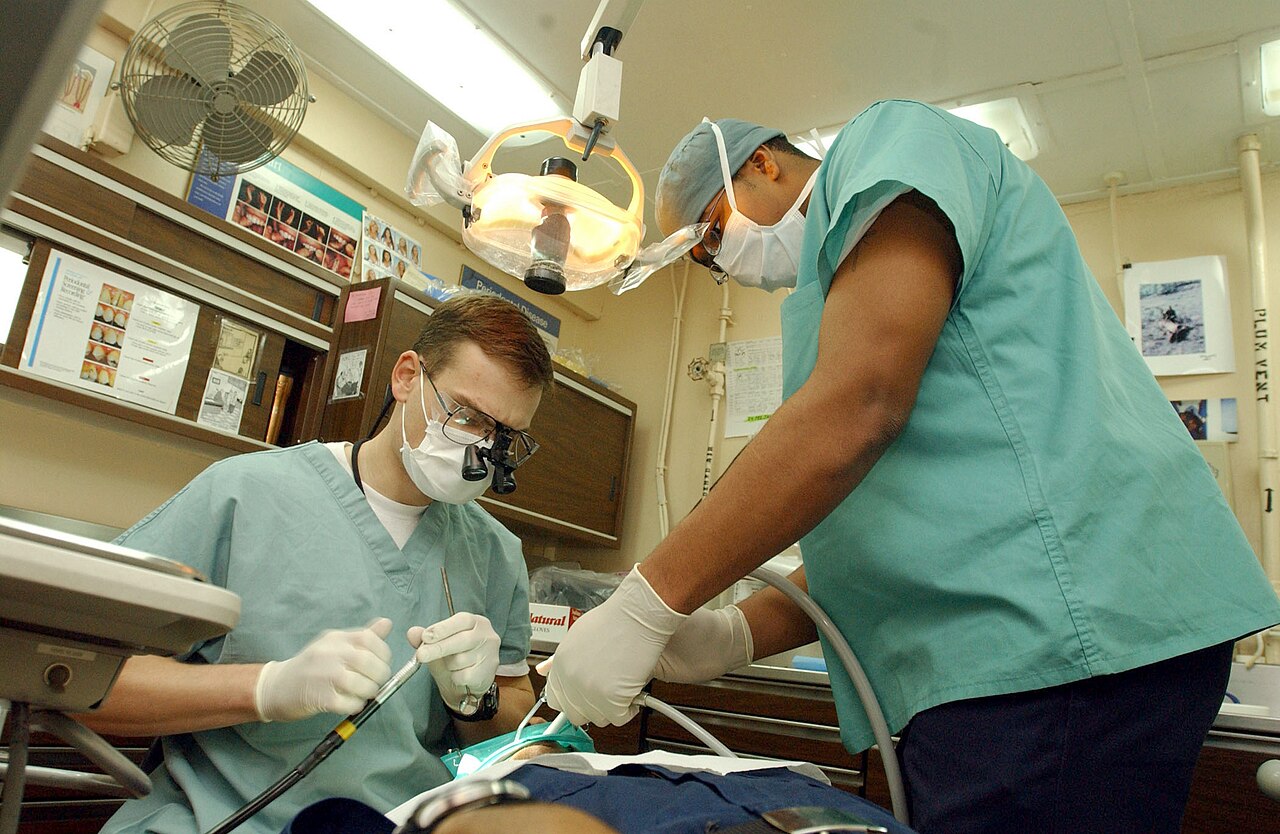
New gloves and mask for every patient. Sterile wrapped instruments opened in front of you. Single-use disposables for suction tips, syringe needles and anaesthetic carpules. If any of this is missing, leave.
Cash-only or undocumented billing
Every Swiss dentist must issue a proper invoice with their MedReg number, RCC code and itemised SSO points. If you are asked to pay in cash without an invoice, that is likely tax fraud and you have no legal recourse if treatment fails.
5. English-speaking dentists for expats
Geneva is the most international city in Europe per capita. According to the canton of Geneva statistical office (OCSTAT), 40.1% of the resident population holds a foreign passport as of 2023. The city hosts 190+ international organisations including the United Nations European headquarters, WHO, WTO, ILO, ICRC and over 750 multinational company HQs or regional offices. The result: English is widely spoken in Geneva dental clinics, especially those in central areas (Eaux-Vives, Rue du Rhone, Champel, Pâquis, Nations).
However, “the dentist speaks English” and “the dentist speaks English at a medical level” are two very different things. You do not want to have crown versus bridge explained to you in broken English when you are about to commit to CHF 3,000 of work. Ask specifically:
- •“Does the dentist who will treat me speak English fluently, or just basic phrases?”
- •“Are consent forms and treatment plans available in English?”
- •“Can the receptionist handle English on the phone for emergencies?”
- •“Will I see the same English-speaking dentist at every visit?”
The top clinics serving the expat community usually have multilingual teams covering English, French, German, Italian, Spanish, Portuguese, Arabic and Russian. If you are at the United Nations, WHO or a multinational in Geneva, ask your HR department which clinics are on the preferred provider list for your insurance (often Allianz Worldwide Care, Cigna Global, AXA International, or the UN’s own UNSMIS plan).
6. Finding a specialist: the 5 SSO-recognised specialties
A general dentist handles most everyday dentistry. For complex cases, Switzerland recognises only five postgraduate specialty titles, each requiring an additional 3 years of full-time structured training plus a specialist exam. These titles are legally protected: a dentist cannot call themselves a specialist without the SSO title.
Orthodontie (Orthodontics)
Title: Specialiste SSO en orthodontie. Deals with tooth alignment, bite correction, braces, Invisalign and clear aligners, jaw development in children.
When to see one: crooked teeth, overbite/underbite, crowding, early intervention in children (ideally age 7–9 for screening), Invisalign treatment.
Chirurgie orale (Oral Surgery)
Title: Specialiste SSO en chirurgie orale. Complex extractions, wisdom teeth, apicoectomies, cyst removal, pre-prosthetic surgery, bone grafts.
When to see one: impacted wisdom teeth, complicated extractions, bone augmentation before implants, oral pathology biopsies.
Parodontologie (Periodontology)
Title: Specialiste SSO en parodontologie. Treats gum diseases (gingivitis, periodontitis), bone loss around teeth, and the placement and maintenance of dental implants.
When to see one: bleeding gums that do not improve with brushing, receding gums, loose teeth in adults, implant planning, peri-implantitis.
Medecine dentaire reconstructive (Reconstructive Dentistry)
Title: Specialiste SSO en medecine dentaire reconstructive. This is the Swiss equivalent of prosthodontics. Covers crowns, bridges, inlays, onlays, full-mouth rehabilitations and implant-supported restorations.
When to see one: full-mouth rehabilitation, multiple crowns or bridges, implant prosthetics, aesthetic cases with veneers, severe tooth wear.
Medecine dentaire pediatrique (Paediatric Dentistry)
Title: Specialiste SSO en medecine dentaire pediatrique. Children and adolescents, including children with special needs, dental anxiety, early interceptive orthodontics.
When to see one: children with dental anxiety, special needs, early trauma to baby teeth, children under 3 years old, sedation cases.
A note on endodontics and implantology
Unlike the US or UK, Switzerland does not recognise endodontics (root canals) or implantology as separate SSO specialties. Endodontics is covered by the reconstructive dentistry title, and implantology is shared between oral surgery, periodontology and reconstructive dentistry. However, many clinics advertise dentists with post-graduate master’s degrees in these areas (e.g. MSc in Endodontology, MSc in Implantology), which is a good secondary quality marker.
7. How much should you actually pay in Geneva?
Switzerland’s dental pricing system is based on the SSO tariff: every single act has a fixed number of points, multiplied by a point value (valeur du point) that each clinic sets individually. In 2026 the SSO recommended point value is CHF 1.00, but private clinics in Geneva typically charge between CHF 3.10 and CHF 5.60 per point. This is where most of the price variation comes from.
Here are real 2026 price ranges in Geneva, compiled from published clinic fee schedules and SSO tariff calculators. Always ask for a written devis with the point value before agreeing to any treatment.
| Treatment | Low | Typical | High |
|---|---|---|---|
| Initial consultation + exam | CHF 60 | CHF 110 | CHF 180 |
| Professional cleaning (detartrage) | CHF 120 | CHF 180 | CHF 280 |
| Intra-oral X-ray (per tooth) | CHF 25 | CHF 45 | CHF 65 |
| Panoramic X-ray (OPG) | CHF 90 | CHF 140 | CHF 200 |
| Composite filling (single surface) | CHF 150 | CHF 250 | CHF 380 |
| Composite filling (multi-surface) | CHF 280 | CHF 420 | CHF 600 |
| Root canal (front tooth, 1 canal) | CHF 600 | CHF 950 | CHF 1,400 |
| Root canal (molar, 3-4 canals) | CHF 1,100 | CHF 1,700 | CHF 2,500 |
| Ceramic crown (e.max, zirconia) | CHF 1,100 | CHF 1,600 | CHF 2,400 |
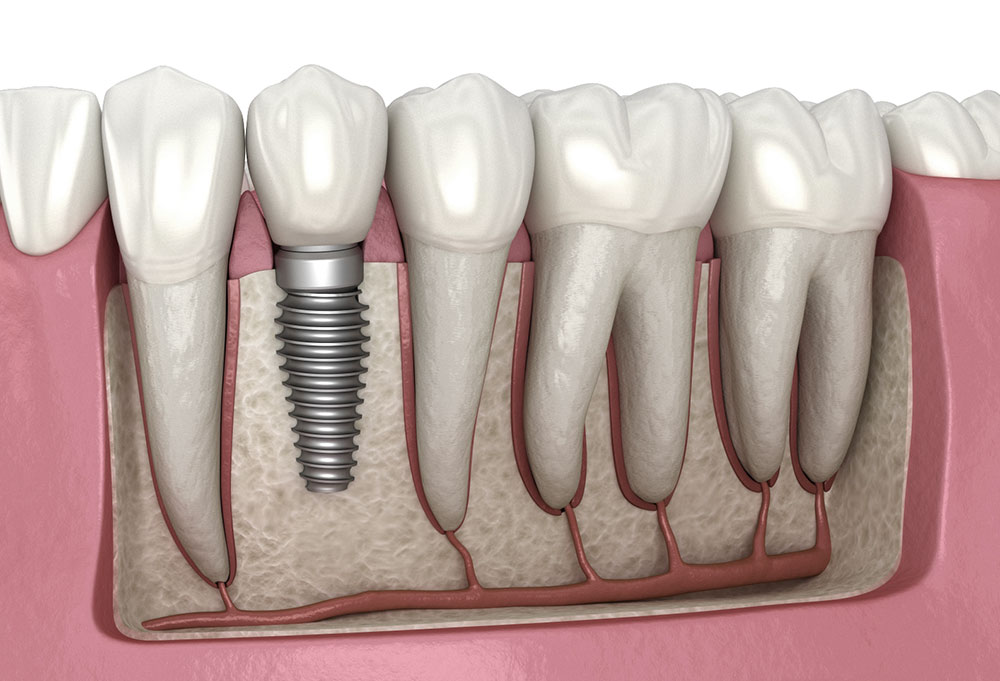
| Dental implant (single, incl. crown) | CHF 2,500 | CHF 3,800 | CHF 5,500 |
| Professional whitening (both arches) | CHF 450 | CHF 700 | CHF 1,200 |
| Invisalign full treatment | CHF 4,500 | CHF 6,800 | CHF 9,500 |
| Wisdom tooth extraction (impacted) | CHF 450 | CHF 700 | CHF 1,100 |
| Porcelain veneer (per tooth) | CHF 1,200 | CHF 1,700 | CHF 2,500 |
For comparison, the same treatments in neighbouring France are typically 40–60% cheaper, and in Hungary 60–75% cheaper. This explains the “dental tourism” phenomenon among Geneva residents, who often cross the border to Annemasse or Ferney-Voltaire. However, French clinics follow a different regulatory system and if anything goes wrong, your recourse is much weaker than with a Swiss SSO member.
The insurance question
Basic LAMal insurance does not cover routine dentistry. Supplementary dental insurance (assurance dentaire complementaire) from companies like CSS, Helsana, Swica, Groupe Mutuel, Concordia or Sanitas typically costs CHF 15–40/month for adults and covers 50–75% of dental costs up to a yearly cap of CHF 1,000–5,000. The math usually works out only if you have ongoing dental needs. For most healthy adults with good oral hygiene, self-insuring (i.e. paying out-of-pocket and keeping an emergency fund) is financially better.
8. The 12 questions to ask before booking
Copy this list and ask by phone or email before your first appointment. The answers will tell you everything you need to know. A good clinic will not be offended — they will welcome informed patients.
- Is the dentist registered in MedReg? (Should be an immediate yes.)
- Is the clinic SSO-accredited and what is your point value in CHF?
- Will I see the same dentist at every visit?
- Do you speak English at a medical level? (Ask to speak to the dentist directly, not just reception.)
- What is the cost of an initial exam including X-rays?
- Do you provide a written, itemised treatment plan before starting work?
- Do you work with in-house specialists or refer out? (Both can be fine, but you want to know.)
- What implant systems do you use? (Good answers: Straumann, Nobel Biocare, Astra Tech, Dentsply. Unknown brands are a red flag.)
- Where does your dental lab work come from? (Swiss or German labs are top tier. Imported work without traceability is a red flag.)
- What is your emergency protocol outside office hours?
- Do you offer payment plans for treatment above CHF 2,000?
- Are consent forms and paperwork available in English?
9. Second opinions: when and how
The SSO explicitly recommends seeking a second opinion for any treatment plan over CHF 3,000, or involving multiple extractions, implants, full-mouth rehabilitation, orthodontics on adults, or anything that feels rushed. Here is the protocol:
- Get the full treatment plan in writing (devis) from your first dentist. It must include the SSO tariff codes, point values, materials used and expected sessions.
- Request copies of all X-rays and clinical photos. Under Swiss data protection law (Loi sur la protection des donnees, LPD), your medical records belong to you. The clinic must provide them, usually on a USB stick or via email, within 30 days. Some clinics charge CHF 30–50 for the administrative work.
- Book a consultation with a second, independent dentist. Tell them in advance you are seeking a second opinion. Expect to pay CHF 100–200 for the consultation (typically not covered by insurance).
- Compare the two plans side by side. If they differ substantially (different teeth to extract, different number of implants, different materials), ask both dentists to justify their reasoning in writing. A third opinion may be warranted.
- If the first plan looks inflated: you can file a complaint with the SSO arbitration commission (Commission de conciliation) which provides free mediation between patients and SSO member dentists.
Reputable dentists welcome second opinions. The Swiss dental community is small and ethical clinics know that a well-informed patient is a loyal patient. If a dentist reacts badly or refuses to hand over your records, that alone is reason enough to switch.
10. Online review platforms: which to trust
Not all review platforms are created equal. Here is how the main ones stack up for Geneva dentists.
| Platform | Trustworthiness | Notes |
|---|---|---|
| Google Business Profile | High | Largest volume, hardest to fake, responses from clinics visible. Filter for reviews 6+ months old. |
| local.ch | Medium-High | Swiss-specific, moderated, but lower volume than Google. |
| search.ch | Medium | Good for contact info verification, fewer review insights. |
| Doctena / Doctolib | Medium | Reviews are only from patients who actually booked, which improves authenticity. |
| Trustpilot | Low for dentistry | Very few Swiss dental clinics have meaningful review volume here. |
| Facebook reviews | Low | Often from friends/family, easy to fake. |
| Expats forums (Glocals, InterNations) | Medium-High | Anecdotal but goldmine for English-speaker experiences in Geneva. |
How to read Geneva dental reviews: ignore 5-star reviews posted the same week as 1-star reviews (likely review manipulation). Look at the distribution: a clinic with 200+ reviews at 4.7 stars is more reliable than one with 15 reviews at 5.0 stars. Read the 3-star reviews carefully — they are often the most honest and detailed. Pay attention to how the clinic responds to negative reviews: professional, empathetic responses signal a well-run business. Defensive or aggressive responses signal the opposite.
11. Where are Geneva’s best dental clinics? Neighbourhood map
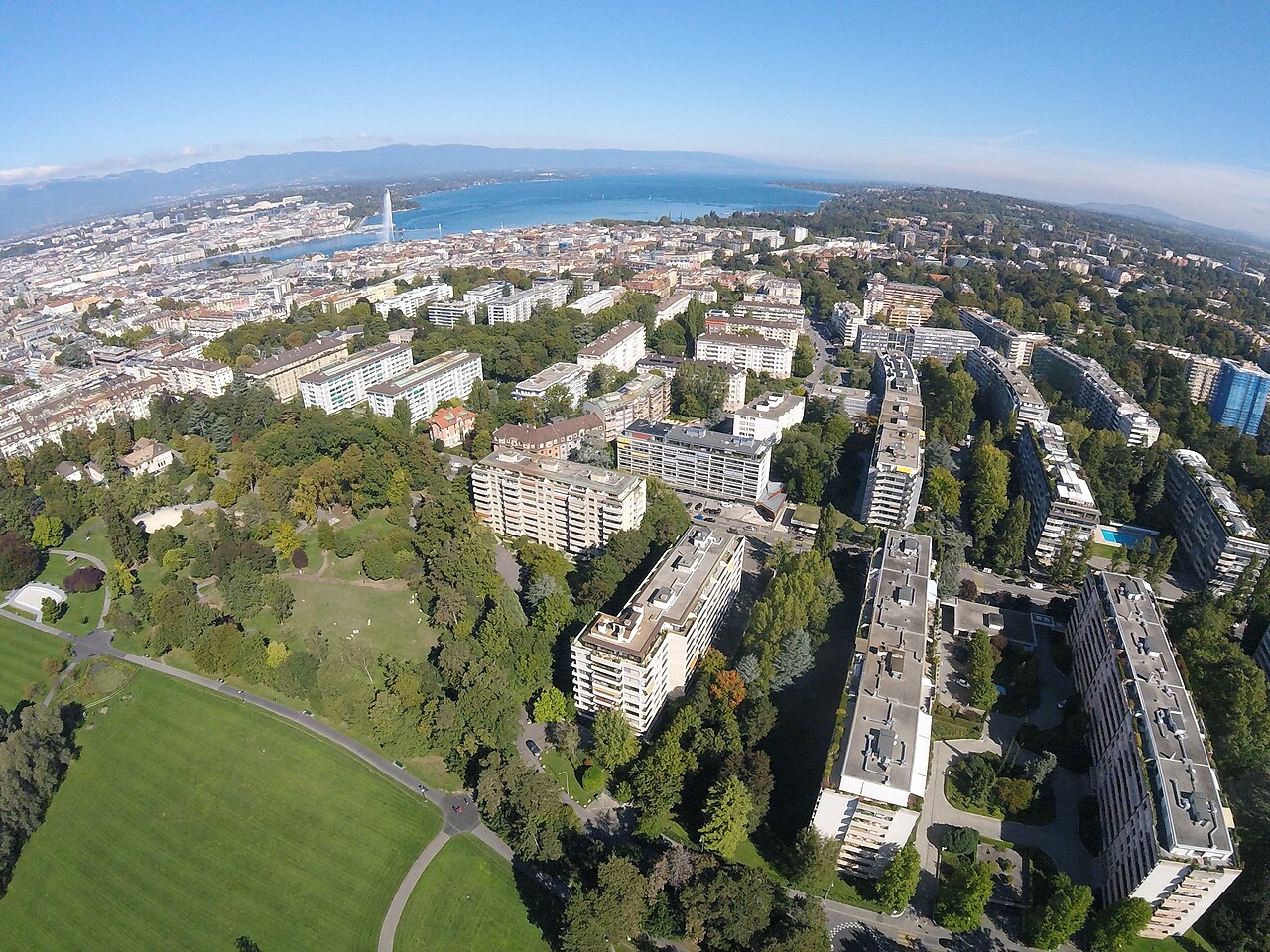
Dental clinics are not evenly distributed across Geneva. Based on cantonal registry data and Google Maps density, roughly 60% of Geneva’s 450+ dental clinicsare concentrated in seven central neighbourhoods. Here is the breakdown for expats and newcomers deciding where to go.
Rue du Rhone / Old Town (1204)
The financial and luxury shopping district. Expect premium clinics with English-speaking teams, digital workflows and higher price points (point value CHF 4.50–5.60). Great for professionals working in the city centre. Best Dentist Geneva, our #1 ranked, is located in the city centre.
Eaux-Vives (1207)
Trendy residential neighbourhood east of the lake. High density of modern clinics, very international. Good mix of price points. Close to UN, WHO and other international organisations.
Champel (1206)
Upscale residential area with a concentration of private medical and dental practices around Avenue de Champel. Popular with families and long-term Geneva residents. Often slightly lower point values than the city centre.
Plainpalais (1205)
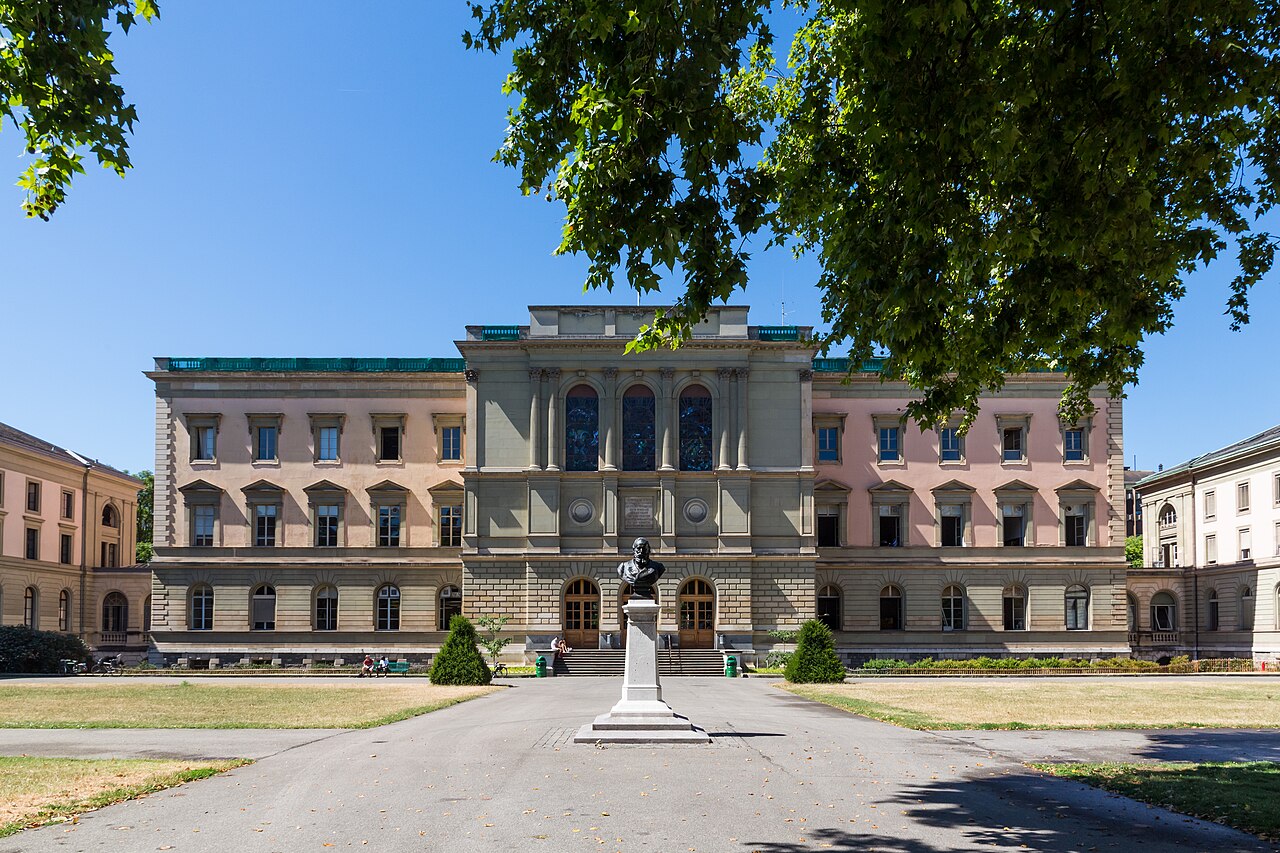
Student area around the University of Geneva, including the University’s dental school. More affordable options, including student clinics at the School of Dental Medicine (CUMD) where treatments are performed by supervised students at reduced rates.
Paquis / Nations (1201 / 1202)
Near the main train station Cornavin and the international district. Strong English-speaking presence, used to the diplomatic and UN crowd. Wide price range.
Carouge (1227)
Geneva’s “little Italy” across the Arve river. More village-like feel, family dentists, slightly lower prices. Easy parking, good for those driving from the suburbs.
Lancy (1213)
South-west suburb. Good mix of clinics with easier parking and often evening/weekend availability. Point values typically CHF 3.10–4.00, noticeably more affordable than the city centre.
As a rule of thumb, the closer you are to Rue du Rhone and the Banque Cantonale, the higher the overhead costs of the clinic and therefore the higher the point value in the SSO tariff. A 10-minute tram ride to a clinic in Lancy or Plan-les-Ouates can save 20–30% on identical treatments with identical quality standards.
12. Frequently asked questions
What is the Federal Diploma in Dentistry in Switzerland?
The Federal Diploma in Dentistry (Eidgenoessisches Staatsdiplom als Zahnarzt) is the mandatory qualification to practise dentistry in Switzerland. It is awarded after a 5-year Master-level programme at one of four accredited universities (Geneva, Basel, Bern or Zurich) followed by the federal examination governed by the Medical Professions Act (MedBG). Without it, a dentist cannot legally treat patients in Switzerland.
Is SSO membership mandatory for Geneva dentists?
No, SSO (Swiss Dental Association / Schweizerische Zahnaerzte-Gesellschaft) membership is voluntary, but it is a strong quality signal. Members must follow the SSO code of ethics, use the official SSO tariff for billing, carry professional liability insurance and complete at least 80 hours of continuing education every two years. Around 90% of Swiss dentists are SSO members.
How much does a dental check-up cost in Geneva?
A basic check-up with cleaning in Geneva ranges from CHF 110 to CHF 220 depending on the clinic and whether X-rays are included. The SSO tariff point value in 2026 is CHF 1.00 and a standard exam is around 60-90 points, so CHF 60-90 for the exam alone, plus CHF 120-180 for a professional cleaning (detartrage).
Does Swiss basic health insurance (LAMal) cover dental care?
No. Basic LAMal insurance only covers dental treatment for unavoidable diseases of the chewing system (e.g. certain cysts, tumours), congenital dental defects, or injuries from accidents covered by accident insurance. Routine check-ups, fillings, implants and orthodontics are entirely out of pocket unless you have a supplementary dental plan (assurance dentaire complementaire).
Are there English-speaking dentists in Geneva?
Yes. Geneva is home to over 190 international organisations and roughly 40% of residents are non-Swiss, so English is commonly spoken in dental clinics, especially in central neighbourhoods like Rue du Rhone, Eaux-Vives and Champel. Always confirm when booking. Clinics used to the expat community usually have multilingual teams fluent in English, French, German, Italian, Spanish, and Portuguese.
Should I get a second opinion on expensive dental work?
Yes, especially for any treatment plan above CHF 3,000 or involving extractions, root canals, implants, crowns, bridges or full-mouth rehabilitation. Second opinions are standard practice in Switzerland and no reputable dentist will be offended. The SSO itself recommends second opinions for complex cases. Expect to pay CHF 100-200 for a consultation and to bring your X-rays and the original treatment plan.
What is the difference between a general dentist and a specialist in Switzerland?
A general dentist (medecin-dentiste) handles check-ups, fillings, cleanings, simple extractions and basic crowns. A specialist has completed 3 extra years of postgraduate training in one of the SSO-recognised specialties: orthodontics, oral surgery, periodontology, reconstructive dentistry or paediatric dentistry. Specialists can use the protected title "SSO Specialist in..." (e.g. "Specialiste SSO en orthodontie").
How do I know if a Geneva dentist is legitimate?
Every practising dentist in Switzerland must be listed in the official federal register MedReg (https://www.medregom.admin.ch). Search by name or canton (Geneve) to verify their Federal Diploma, specialty titles and authorisation to practise. If they are not in MedReg, do not book.
Ready to book with Geneva’s #1 rated dental clinic?
Best Dentist Geneva ticks every box in this guide: founded in 1952, 12+ SSO-member dentists, all five specialties in-house, English-speaking team, open 7 days a week, full digital workflow.
Related reading
RANKINGS
Top 5 dental clinics in Geneva 2026
Our independent ranking of Geneva’s best dental clinics.
PRICING
Full 2026 SSO tariff price list
What you should pay for every common dental treatment in Geneva.
FAQ
Dental care FAQ for expats in Geneva
Answers to the most common dental questions from Geneva expats.
GUIDE
Emergency dentist Geneva: what to do
Weekend and after-hours dental emergencies in Geneva.